Top Artificial Green Walls for Global Buyers?
Choosing the Top Artificial Green Walls for Global Buyers requires more than comparing photographs and prices. A convincing wall should look natural under office lighting, remain stable near sunny windows, and arrive with clear installation guidance. Buyers also need evidence of UV resistance, flame performance, material safety, acoustic claims, and warranty coverage. These details separate a dependable product from a beautiful sample that fades quickly.
Oliver Heath, a recognized biophilic design consultant, says, “Biophilic design should create a meaningful connection with nature, not just imitate its appearance.” That principle matters when evaluating Artificial Green Walls for hotels, offices, retail spaces, and residential projects. Real leaves show irregular color, layered depth, and small imperfections. The best artificial panels try to reproduce those visual cues without demanding irrigation, sunlight, or weekly trimming. Still, no product is completely maintenance-free. Dust gathers between dense foliage, connectors can loosen, and low-quality plastics may develop an obvious sheen.
This guide examines leading options through a practical global-buyer lens. It considers foliage realism, panel construction, fire documentation, packaging, customization, installation support, and long-term upkeep. Regional standards may differ, so buyers should verify certificates with local professionals before ordering large quantities. A supplier’s reputation helps, but it is not enough. Request samples. Ask for batch consistency. Check the return policy. The “best” wall may not be the most expensive or the most photographed. Sometimes, a simpler panel performs better in a demanding corridor. That is an uncomfortable point, but it deserves attention.
Definition and Uses of Artificial Green Walls
Top Artificial Green Walls for Global Buyers?
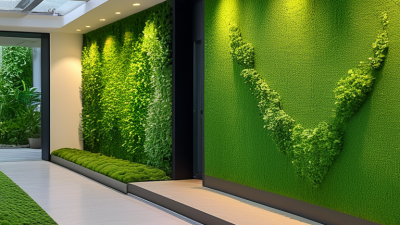
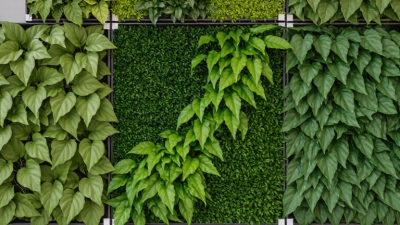
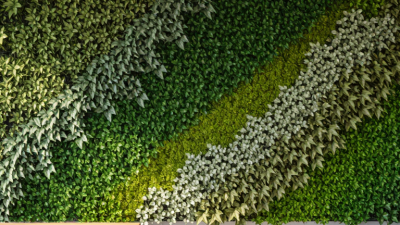
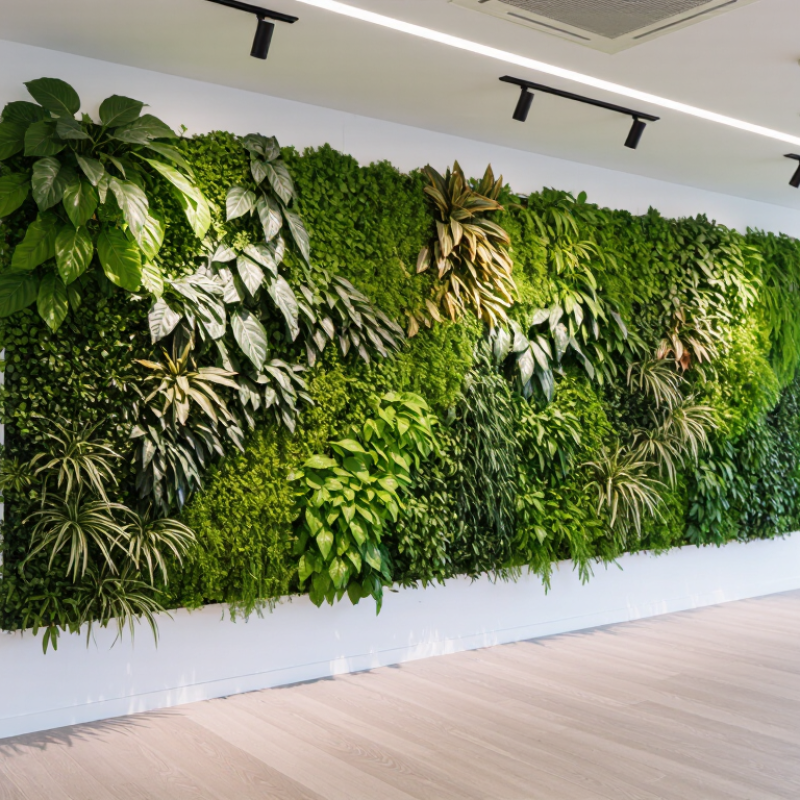
Artificial green walls are decorative systems made from synthetic plants fixed to panels, mesh, or framed backings. They create a planted appearance without soil, irrigation, or daily sunlight. Many include leaves, vines, moss-like textures, and seasonal color combinations. Their quality depends on material density, color stability, edge finishing, and secure attachment.
These walls suit offices, hotels, restaurants, retail stores, event venues, balconies, and residential interiors. A reception wall can soften a plain entrance. In a small apartment, vertical foliage adds visual depth without using floor space. Some installations also improve privacy between seating areas. However, they do not replace living plants or guarantee meaningful air purification. That point is often misunderstood.
Global buyers should request material samples, installation instructions, and current fire-performance documents. UV resistance matters for sunny windows, covered terraces, and outdoor displays. In humid regions, buyers should check mold-resistant backing and drainage around the structure. Packaging also deserves attention because crushed leaves can arrive after long-distance shipping. Panels may need reshaping by hand. Not every “natural-looking” wall performs equally well, and low-cost options can fade sooner than expected. Local building rules should guide final selection, especially in public or commercial spaces.
How to Evaluate Quality, Safety, and Durability
For global buyers, an artificial green wall should be judged like a building material, not a decoration. During procurement inspections, check leaf density, backing strength, and panel connections. Loose stems often reveal weak assembly. Ask for batch-specific test documents, not only a general product brochure.
Fire performance deserves careful attention. ASTM E84 measures flame spread on a 0–100 scale and smoke development on a 0–450 scale. Class A materials generally require a flame-spread index of 0–25 and smoke development of 0–450. However, one tested sample does not represent every finished wall. The installer, adhesive, backing, and lighting can change the result. Request testing for the complete assembly. Do not trust a glossy certificate alone.
Durability needs evidence under realistic conditions. ISO 4892-3 describes fluorescent ultraviolet exposure, but it does not promise a fixed outdoor lifespan. Ask for exposure hours, color-change results, and temperature conditions. A quality wall should also resist cracking, shedding, and moisture absorption. The U.S. EPA’s indoor-air guidance supports controlling volatile organic compounds through low-emission materials and ventilation. Request VOC test results for plastics, adhesives, and backing layers. We sometimes overlook the backing. That is a mistake. In my view, the weakest layer usually decides the wall’s actual service life. Suppliers should disclose cleaning methods, replacement parts, and inspection intervals in plain language.
Global Purchasing Factors: Suppliers, Costs, and Compliance
Global buyers are choosing artificial green walls for offices, hotels, retail spaces, and outdoor façades. Grand View Research valued the global artificial plants market at about USD 6.52 billion in 2022, with projected growth through 2030. That expansion attracts more suppliers, but quality varies sharply. Buyers should inspect leaf density, backing strength, color consistency, and carton protection before approving bulk production. Samples matter.
Supplier comparison should use landed cost, not unit price. Include product cost, tooling, packaging, freight, insurance, duties, installation, and expected replacement parts. The World Bank’s 2023 Logistics Performance Index compares 139 economies and highlights customs, infrastructure, tracking, and delivery reliability. These factors can change a seemingly cheap quotation. Ask for production capacity, minimum order quantity, lead time, factory audit records, and a written warranty. Do not rely only on polished photographs.
Compliance requires product-specific evidence. For indoor projects, request flame-performance testing relevant to the destination market, such as ASTM E84 or EN 13501-1, where applicable. For outdoor walls, check UV-aging results, water resistance, fixing systems, and material declarations. Plastic foliage may require chemical documentation under regional rules, including REACH obligations in Europe. Certificates are not interchangeable. Document every claim.
A weak purchasing decision often begins with unclear responsibility. I would require a pre-shipment inspection, batch photographs, and retained samples. Yet even these controls cannot predict every installation problem. A small pilot order is slower, but usually exposes color mismatch, odor, or fragile connectors before the full shipment.