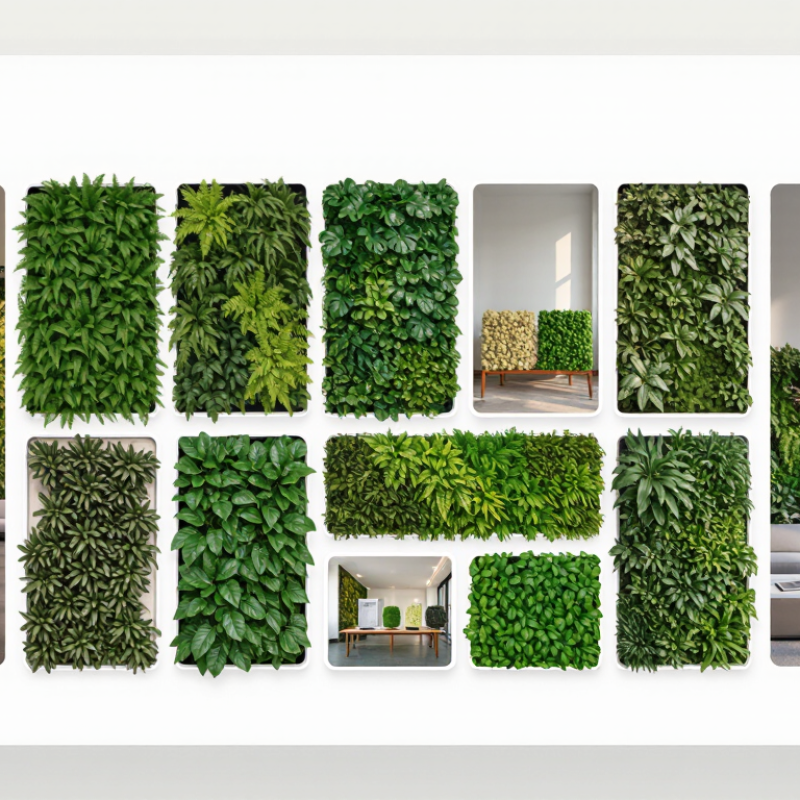
| Premium PE/PP Mixed Foliage Panels |
Polyethylene and polypropylene leaves on a polymer or metal backing |
Hotels, offices, retail interiors, reception areas, and sheltered exterior walls |
Approximately 3–8 kg/m², depending on foliage density and backing |
Good when UV stabilizers are used; outdoor color retention depends on formulation, exposure, and climate |
Plastic foliage is combustible unless the complete wall assembly has a tested flame-spread classification; request reports for the finished system |
Approximately 5–10 years indoors; outdoor life varies widely with sunlight, heat, moisture, and maintenance |
Low; dust removal and periodic inspection of clips, seams, and backing |
High; mixed leaf sizes, layered textures, modular shapes, and custom cutting are generally available |
Confirm polymer type, UV test method, flame test standard, backing reaction to fire, panel dimensions, and installation hardware |
| Economy PE Foliage Panels |
Injection-molded or extruded polyethylene foliage with a lightweight plastic grid |
Budget-conscious indoor decoration, temporary displays, and low-traffic areas |
Approximately 2–5 kg/m² |
Basic outdoor resistance; untreated or lightly stabilized plastic can fade, become brittle, or deform faster in strong sun |
Do not assume fire resistance from appearance; obtain independent testing for commercial or public installations |
Approximately 2–5 years outdoors and 4–8 years indoors, depending on exposure and construction quality |
Low; gentle vacuuming or dusting is normally sufficient indoors |
Medium; usually fewer plant varieties, shallower profiles, and less natural layering |
Check leaf attachment strength, grid rigidity, odor, colorfastness data, edge finishing, and replacement-panel availability |
| UV-Stabilized Outdoor Green Walls |
UV-stabilized PE, PP, PVC, or blended synthetic fibers with weather-resistant backing |
Balconies, covered façades, garden rooms, fences, terraces, and exterior feature walls |
Approximately 4–10 kg/m² |
Best suited to exterior use; actual performance should be supported by accelerated UV-aging data and installation-specific limitations |
Outdoor use does not remove fire obligations; verify flame spread, ignition, smoke, and local façade requirements |
Approximately 5–10 years outdoors in moderate conditions; shorter in intense sun, high heat, coastal air, or frequent storms |
Low to medium; rinse or clean where permitted and inspect drainage, anchors, and wind exposure |
High; can combine several textures and plant profiles to cover large exterior surfaces |
Request UV-aging hours, color-change criteria, temperature range, wind-load guidance, corrosion resistance, and drainage details |
| Textile and Polyester Botanical Panels |
Polyester fabric, acrylic fibers, textile leaves, and molded stems |
Interior offices, exhibitions, restaurants, acoustic feature areas, and temporary installations |
Approximately 2–6 kg/m² |
Generally better for interiors; direct sunlight may cause fading unless UV protection is specified |
Some textile materials can be treated for flame resistance, but treatment may affect durability; verify the complete panel test report |
Approximately 5–10 years indoors with suitable cleaning and low mechanical impact |
Medium; fabric can collect dust and may require careful vacuuming or professional cleaning |
Very high; lightweight foliage, flowers, grasses, and custom color palettes are easy to combine |
Confirm textile composition, colorfastness, cleaning method, flame-retardant durability, acoustic claims, and odor limits |
| Artificial Moss-Style Panels |
Synthetic fibers, polyurethane or polymer foam structures, and molded textured surfaces |
Biophilic interiors, acoustic backgrounds, corridors, meeting rooms, and low-light locations |
Approximately 3–8 kg/m² |
Usually intended for indoor use; prolonged moisture and direct UV exposure may damage texture and color |
Foam or fiber cores may burn differently from the surface; require full-assembly fire testing before use in public buildings |
Approximately 5–10 years indoors when protected from moisture, abrasion, and strong sunlight |
Low to medium; textured surfaces need gentle dust removal to avoid crushing the profile |
High; dense textures can be combined with branches, ferns, grasses, and logo-free geometric layouts |
Check core material, moisture limits, acoustic test conditions, fire classification, panel thickness, and compression recovery |
| Modular Artificial Living-Wall Style Systems |
Interchangeable synthetic plants mounted in trays, grids, or framed modules |
Large commercial projects requiring phased installation, access panels, or future reconfiguration |
Approximately 6–15 kg/m², including frames, trays, or mounting structure |
Performance depends on the foliage material and the exposed frame; metal parts need suitable corrosion protection outdoors |
Evaluate each component and the assembled wall; concealed voids, backing boards, and electrical elements may affect compliance |
Approximately 7–12 years indoors when modules are replaceable and the structure is properly maintained |
Medium; individual modules can be removed, cleaned, repaired, or replaced |
Excellent; supports zoning, seasonal rearrangement, access planning, and large-scale design control |
Confirm structural load, fixing method, module tolerances, replacement process, access clearance, warranty terms, and spare-part supply |