Leave Your Message
Choosing Potted Artificial Plants can transform a dim corner, but attractive photos rarely reveal the full buying decision. A convincing choice must suit the room’s light, scale, traffic, and cleaning routine. In real homes, a tall fiddle-leaf may brighten a hallway, yet its broad leaves can block coats or collect dust. A compact fern might look less dramatic, but it often works better beside a narrow desk. These practical differences matter more than seasonal styling advice.
This guide draws on interior styling principles, product inspection habits, and everyday maintenance experience. It considers leaf texture, stem construction, pot stability, color accuracy, and material information from reputable sellers. The goal is not to make every room look identical. It is to help readers judge whether a plant feels believable from a doorway and at arm’s length. Small details count. Look for natural variation, weighted bases, clean seams, and foliage that does not shine like plastic under a lamp. Still, no artificial plant is flawless. Some premium pieces contain visible joins, while inexpensive options may fade faster near sunny windows. That honest tension deserves attention.
The ten tips also address measurements, placement, cleaning, and long-term value. Measure the pot and available floor space before ordering. Check return policies carefully. A plant that looks perfect online may overwhelm a small apartment or appear strangely short beside a deep sofa. Texture, proportion, and honest product descriptions often matter more than a low price. With careful comparison, Potted Artificial Plants can provide lasting character without demanding watering, pruning, or specialist care.
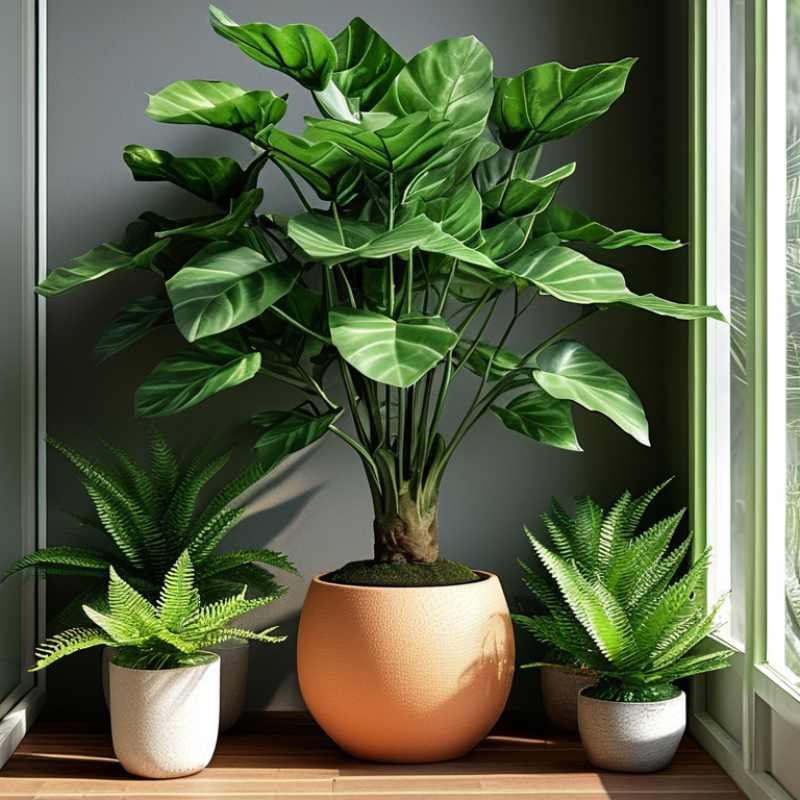
10 Tips for Choosing Potted Artificial Plants
Understanding plant types and materials makes selection more practical. Single-stem plants suit narrow shelves and small tables. Bushy plants create fuller shapes for empty corners. Trailing varieties work well on tall cabinets. Topiary forms add structure near entrances. Grasses and succulents usually fit modern interiors.
Material affects appearance, durability, and maintenance. Polyethylene leaves often provide realistic texture and stronger color stability. PVC leaves can look glossy, though that shine may seem artificial under bright lighting. Silk or polyester foliage feels softer, but it may collect dust more easily. Many stems contain flexible wire, which allows careful shaping. I once bent several stems too sharply. The inner wire showed through, and the plant looked damaged.
The pot matters as much as the foliage. Ceramic pots feel substantial, while plastic pots are easier to move. A weighted base helps taller plants remain stable near doors or pets. Check whether the pot has a sealed bottom; artificial plants usually need no drainage. For sunny rooms, choose products tested for UV resistance, but do not assume “fade-resistant” means permanent. Outdoor use also requires checking temperature and moisture guidance. Keep foliage away from heaters and open flames. Clean leaves with a soft, slightly damp cloth. I prefer seeing the plant in person, because online photos can hide awkward stems, thin leaves, or an undersized pot. Even experienced buyers sometimes choose realism over room balance. That choice can feel wrong later.
| No. | Choosing Tip | Plant Type | Common Materials | Best Use | Durability | What to Check |
|---|---|---|---|---|---|---|
| 1 | Match the plant form to the space. | Floor tree or palm | Polyester or polyethylene leaves; plastic stems; cement or sand-filled base | Living rooms, entryways, offices, and large corners | High indoors | Measure ceiling height and walking clearance. Choose a weighted pot for tall plants to reduce tipping. |
| 2 | Choose foliage according to the desired visual effect. | Broad-leaf plant | Fabric, polyester, polyethylene, or PVC leaves | Adding volume and a soft, layered appearance | Medium to high | Look for varied leaf sizes, natural color gradients, and flexible stems instead of uniform shapes. |
| 3 | Use trailing plants where vertical space is limited. | Hanging or trailing vine | Polyester leaves; wire-reinforced plastic or fabric stems | Shelves, bookcases, wall planters, and hanging baskets | Medium indoors | Check branch flexibility and attachment points. Keep the hanging hardware rated for the total pot weight. |
| 4 | Select realistic textures for close viewing. | Succulent or cactus | Molded polyurethane, polyethylene, PVC, and sometimes silicone details | Desks, bathrooms, kitchens, and small shelves | High indoors | Prefer matte surfaces and subtle color variation. Glossy plastic can appear less natural under strong lighting. |
| 5 | Consider UV protection for outdoor placement. | Outdoor-rated shrub or topiary | UV-stabilized polyethylene, UV-treated PVC, and weather-resistant metal wire | Covered patios, balconies, porches, and sheltered entrances | Varies by exposure | Verify that the product is specifically rated for outdoor use. Direct sun, wind, and moisture can shorten service life. |
| 6 | Choose the pot material based on weight and style. | General potted plant | Ceramic, terracotta, fiberglass, resin, plastic, or metal | Residential and commercial interiors | Material-dependent | Ceramic and terracotta offer visual weight but can break; resin and plastic are lighter and easier to move. |
| 7 | Check stem construction before buying. | Branching tree or ornamental plant | Steel or aluminum wire core covered with plastic, rubber, or fabric | Plants that need shaping or a fuller silhouette | Medium to high | A bendable internal wire allows adjustment, but repeated sharp bending may fatigue the wire or covering. |
| 8 | Prioritize low-maintenance surfaces. | Dust-resistant tabletop plant | Polyethylene, PVC, polyester fabric, and sealed decorative stones | Busy homes, reception desks, restaurants, and offices | High indoors | Select washable leaves and a securely covered filler. Dust can usually be removed with a soft cloth or gentle air flow. |
| 9 | Match plant scale and color to the room. | Mixed foliage arrangement | Combination of fabric, plastic, wire, moss, and decorative aggregate | Dining areas, hotel-style interiors, and open-plan rooms | Medium to high | Use one dominant green tone with a few complementary shades. Avoid arrangements that visually overwhelm the furniture. |
| 10 | Inspect safety, stability, and material quality. | Any potted artificial plant | Nonwoven fabric, plastics, metal wire, foam, cement, sand, and decorative stones | Homes, workplaces, schools, and public interiors | Depends on construction | Look for secure leaf attachment, stable bases, enclosed filler, low odor, and materials suitable for the intended environment. |
Note: Actual durability depends on construction quality, handling, cleaning frequency, sunlight, humidity, wind, and temperature exposure.