How to Choose Artificial Trees in 2026?
Choosing Artificial Trees in 2026 is about more than finding the fullest branches or the lowest price. A tree should fit your room, suit your decorating habits, and hold up through repeated seasons. Start with the space: measure ceiling height, allow room for a topper, and check the tree’s width against nearby furniture. Measure before buying. A tree that looks compact online can crowd a small living room once its branches are spread.
Compare branch density, needle material, hinge construction, and stand stability. PVC can offer a traditional look at an accessible price, while PE tips often provide more realistic texture; many trees combine both. Look closely at product photos, branch counts, and assembly details rather than relying on a single “realistic” label. Small details matter. If the tree includes lights, check whether they are replaceable or integrated, and review the manufacturer’s care and safety instructions.
Your routine matters, too. A hinged tree may save setup time, while a slim profile can work better near a doorway or sofa. Storage is easy to overlook: consider the packed dimensions and where the box will go after the holidays. No option is perfect. A highly realistic tree may cost more, shed less visual charm in a dark corner, or take longer to fluff than expected. This guide explains how to weigh those trade-offs using practical features and verifiable product information, so you can choose a tree that fits your home—not just a polished catalog image.
Define the Purpose and Setting for Your Artificial Tree
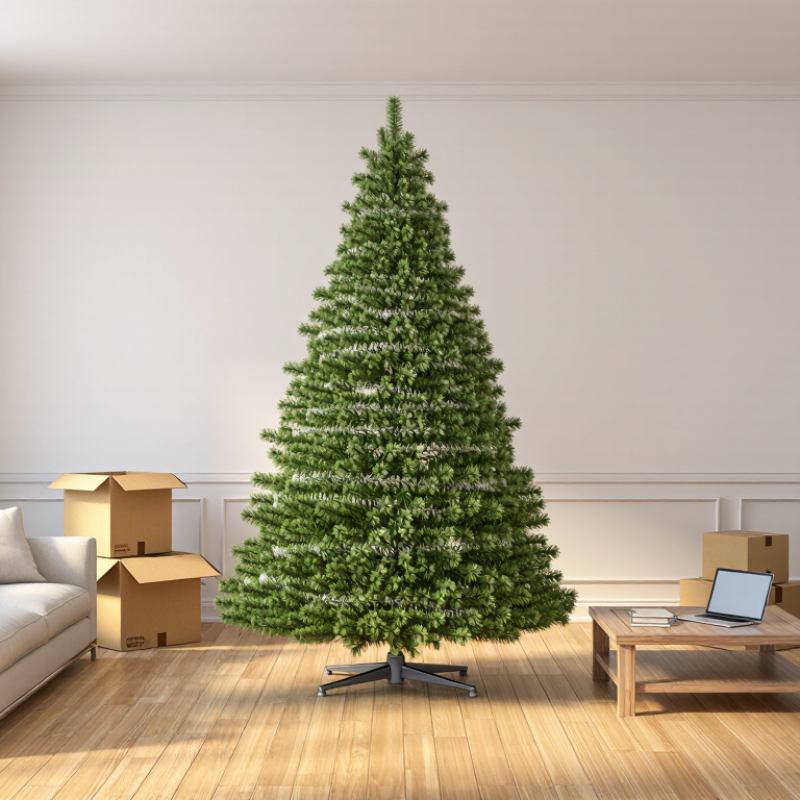
Before choosing an artificial tree, decide what it needs to do. A living-room centerpiece should suit the room from every angle, while a tree in a narrow entryway needs a slim profile and stable base. Measure ceiling height, floor space, and the distance from doors, heaters, and walkways. Measure twice. I have learned that a tree can look perfect in a product photo and still overwhelm a small room. A modest tree with clear floor space often feels more welcoming than a taller one squeezed beside the sofa.
The setting also shapes practical choices. For a family room, sturdy branches may hold heavier ornaments; for a bright window, realistic color and tidy wiring matter more. In a workplace or shop, check that the base stays level on the actual flooring and that decorations cannot snag passing bags or sleeves. NFPA’s 2022 Christmas Tree Fires report found an average of 160 home structure fires involving Christmas trees each year from 2016 to 2020. That figure covers Christmas trees generally, not artificial trees alone, but it reinforces the value of careful placement and lighting. Read the tree’s instructions, inspect its lights, and keep it clear of heat sources. The inconvenient part: the best spot may not be the most photogenic one.
How to Choose Artificial Trees in 2026? - Define the Purpose and Setting for Your Artificial Tree
| Purpose |
Typical Setting |
Suggested Height |
Shape and Foliage |
Practical Checks |
| Make a focal point in a living room |
Open corner or area beside a window |
1.8–2.4 m (6–8 ft), depending on ceiling height |
Full or medium profile; realistic mixed-material foliage can add varied texture |
Measure the ceiling and the available floor area. Leave room to walk around the tree and arrange its branches. |
| Decorate a small apartment or narrow room |
Compact living area, bedroom, or apartment entry |
1.2–1.8 m (4–6 ft) |
Slim or pencil profile; moderately dense foliage helps limit floor space |
Check the stated width as well as the height, and confirm that the stand fits the chosen spot. |
| Add greenery to an office or reception area |
Reception desk, meeting room, or office corner |
1.2–2.1 m (4–7 ft) |
Upright, balanced shape with foliage suited to the room’s style |
Choose a stable base and a finish that can be cleaned with light dusting. Keep it clear of doors and accessible routes. |
| Fill an empty indoor corner year-round |
Hallway, dining area, or unused corner |
1.5–2.4 m (5–8 ft) |
Choose a canopy width that suits the corner; branching forms can soften angular spaces |
Check the tree’s assembled footprint and leave clearance from heaters, vents, and high-traffic paths. |
| Create a seasonal display |
Living room, shop display, or event space |
1.5–2.4 m (5–8 ft), scaled to the display area |
Fuller branches provide more room for ornaments; sparse branches create a lighter look |
Confirm the stand’s stability and the tree’s storage dimensions. For lit models, check the power connection and instructions. |
| Decorate a covered outdoor area |
Covered porch or sheltered patio |
1.2–2.1 m (4–7 ft) |
A shape and foliage finish that complements the space; outdoor suitability depends on the product |
Use only a tree specifically labeled for outdoor use. Protect it from wind and moisture as directed, and secure the base. |
Measurements are general planning ranges. Actual assembled height and width vary by design; check the product specifications and measure the intended location before choosing.
Compare Tree Materials, Styles, and Realistic Details
Choosing an artificial tree starts with its material, since needles affect texture, weight, and shape. Polyethylene (PE) tips are molded to resemble individual needles, often giving the outer branches a more lifelike finish. Polyvinyl chloride (PVC) creates flatter, softer-looking foliage and can add fullness at a lower cost. Many trees combine both. No material wins every test. ACTA’s 2023 U.S. consumer survey reported that 83% of respondents planning to display a Christmas tree intended to use an artificial one. That popularity makes careful comparison worthwhile.
Match the silhouette to the room. Fir styles usually look dense; spruce branches can appear more open, while slim profiles suit narrow corners. Grand View Research estimated the broader global artificial-plants market at about US$1.6 billion in 2023; that category includes products beyond holiday trees. Treat that figure as market context, not proof of tree quality. Look at the hinge. Check whether branches spread evenly, whether inner PVC needles show through, and whether the trunk stays hidden from eye level. Feel the tips. A realistic tree has varied needle lengths, muted color shifts, and sturdy branches that hold ornaments without sagging. Flocked finishes can look snowy, but excess coating may shed during setup. I would inspect one assembled in person when possible; product photos often hide sparse areas, and that detail is easy to miss.
Choose the Right Height, Shape, and Placement
How to Choose Artificial Trees in 2026?
Height, shape, and placement matter more than a tree’s listing photo suggests. Measure ceiling height, then subtract the stand, topper, and at least 6 inches of clearance. A tree that fits on paper can still feel cramped beside a low light fixture.
The American Christmas Tree Association’s 2023 consumer survey reported that 82% of U.S. respondents planning a holiday tree expected to choose an artificial one. That popularity makes careful sizing worthwhile, not automatic.
Tips: Measure the floor space, too. Mark the tree’s widest point with painter’s tape, then check doors, vents, and walking paths. Slim profiles suit tight corners; fuller shapes need room to breathe.
Match the silhouette to the room. A narrow tree can preserve sightlines in a small living room, while a fuller profile often anchors a large, open space. Place it where branches won’t block a doorway or sit against a heat source. Keep enough clearance for people to pass without brushing ornaments. One easy-to-miss detail: the widest branches may sit lower than expected, so check the stated width and measure that area on your floor. Product dimensions vary, and a little extra space usually looks better than a tree squeezed into a corner.
Check Safety, Durability, and Environmental Considerations
How to Choose Artificial Trees in 2026?
Check Safety, Durability, and Environmental Considerations
In 2026, look beyond appearance and inspect how an artificial tree is made and assembled. Read its warning and care labels, and check whether the lighting and wiring have clear safety information. If the tree arrives with a damaged plug, exposed wire, or strong lingering odor, stop and contact the seller rather than using it. Keep branches and electrical connections away from heaters, fireplaces, and damp areas. Small details matter. A stable stand should sit flat on the floor, without wobbling when you gently press a branch.
For durability, open and close the branches and check hinges, tips, and joints for looseness. Ask how the tree should be stored; a dry box away from direct sunlight can help limit fading and brittle needles. Even careful checks cannot predict every weak hinge after several seasons. That part deserves reflection. Environmental impact is less simple than a “reusable” label suggests: a tree used for many years may avoid frequent replacements, but mixed plastics and metal can make end-of-life recycling difficult. Consider the materials, repair options, packaging, and local disposal guidance before buying. A slightly uneven branch can be rearranged; a poor-quality frame is harder to fix.
Evaluate Features and Costs Before Buying in 2026
When choosing an artificial tree in 2026, compare features with the space and effort you actually have. Measure ceiling height, including the stand, and leave room for a topper. Check branch construction, hinge quality, and how naturally the tips spread. A dense tree may look fuller, but it can take longer to shape and need more storage space. Ask whether lights are included, replaceable, and covered by a clear warranty. Small details matter.
Price is only part of the cost. Add the stand, ornaments, storage bag, and any replacement lights before comparing options. A lower-priced tree may make sense for occasional use, while a sturdier model could be better for yearly setup. Consider the cost across several seasons, but avoid assuming every tree will last equally long. Warranty terms and careful storage affect that calculation. I sometimes give too much weight to a polished product photo; branch spacing can look different in a real room.
If possible, inspect a sample from several angles. Gently separate the branches and look for gaps near the trunk. Check the packed dimensions, too. A tree that fits beautifully may be awkward to carry upstairs or store in a crowded closet. There is no perfect choice. Set a spending limit, then prioritize the features you will notice each season.