How to Choose the Best Artificial Bonsai Plants
Choosing the best artificial bonsai plants begins with the setting, not the product photo. A compact tree may suit a desk, while a broader design can anchor an entryway shelf. Measure the available space and consider the viewing distance. Small details matter. Look for balanced branches, layered foliage, and a trunk finish that does not appear overly glossy. These features can make a model feel more convincing up close. An Artificial Plant Bonsai should also fit the room’s colors and style, rather than compete with them.
Materials and construction affect both appearance and everyday use. Compare the leaf texture, branch flexibility, pot stability, and visible seams. Check whether the branches can be gently shaped, and whether the plant arrives ready to display or needs careful arranging. Product images can hide scale, so review stated dimensions and customer photos when available. They are useful, though not perfect evidence. Dust may collect between dense leaves, and some finishes can look less natural in bright light. Consider how easy the design is to clean, and whether its care requirements suit your routine. The right choice is not always the most expensive or realistic-looking option. It is the one whose size, finish, and upkeep make sense for your space. A little skepticism helps.
Understanding Artificial Bonsai Types and Materials
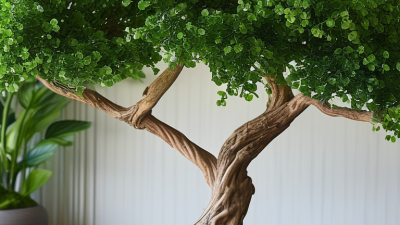
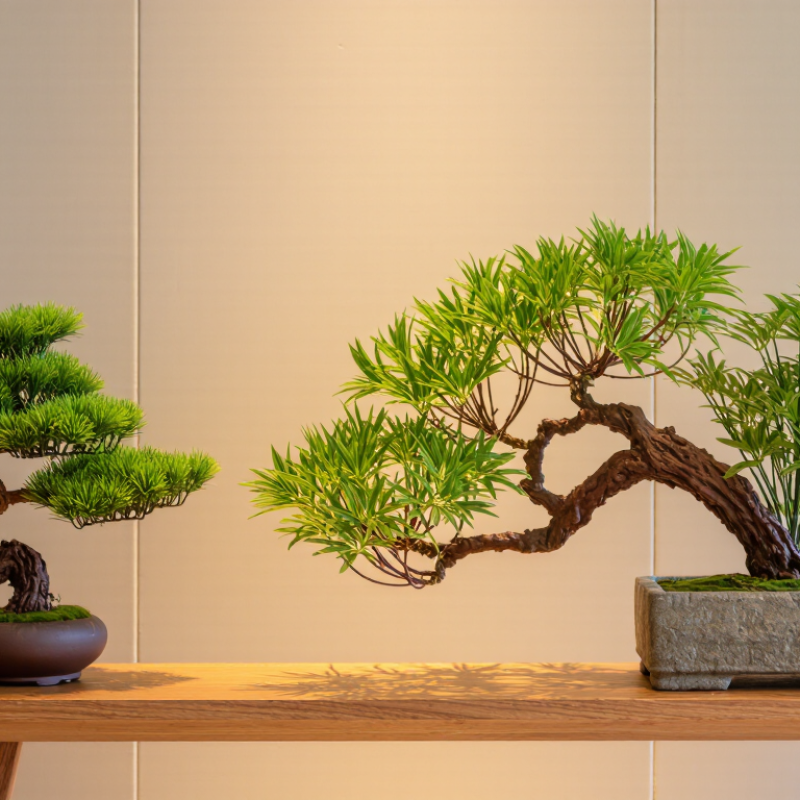
Artificial bonsai come in several forms, from compact upright trees to windswept and cascading designs. An upright shape suits a narrow desk, while a cascading style needs room below its pot. Look closely. The foliage should vary in size and direction, rather than forming one smooth, plastic-looking ball.
Materials & details
Materials shape both appearance and care. Silk or polyester leaves can show fine color variation, but may collect dust in their folds. Polyethylene foliage often feels firmer and can hold crisp leaf shapes; PVC may look glossy under strong light. Neither material is automatically more realistic. Check the branches, too: flexible wire inside them makes shaping easier, while exposed wire or stiff joints can spoil the silhouette. Trunks may be molded resin, wrapped wire, or natural wood combined with artificial leaves. Each has trade-offs. I still find that a convincing trunk matters more than tiny leaves, though that is not true for every viewing distance.
A weighted ceramic pot can make a small tree feel steadier, but it also makes moving it less convenient. For a sunny windowsill or covered patio, check whether the foliage is rated for UV exposure; indoor materials can fade or become brittle outdoors. Touch the leaves and inspect the back of the canopy. Slight irregularity often looks more natural, but uneven construction can also signal poor finishing. The distinction takes a little judgment.
Assessing Space, Scale, and Placement
How to Choose the Best Artificial Bonsai Plants
Assessing Space, Scale, and Placement
Start with the surface where the bonsai will sit, not the plant itself. Measure the tabletop, shelf, or entryway ledge, then leave room for nearby objects and easy cleaning. A pot that nearly fills a narrow shelf can feel crowded, even when the tree is small. Keep a few inches of open space around it.
Scale matters as much as height. A low coffee table usually suits a compact bonsai with a spreading canopy, while a tall console can support a more upright silhouette. Check the plant’s full dimensions, including its pot and widest branches. Product photos can make foliage look fuller than it is. That can be disappointing.
Placement affects how convincing the arrangement feels. Set the tree near natural light, but avoid strong direct sun that may fade some materials over time. Keep it away from heaters and damp windowsills. At eye level, visible plastic leaves may stand out, so adjust the angle or place the bonsai slightly farther back. Walk past it from different sides. One view may look balanced; another may reveal a bare trunk or an awkwardly clipped branch. Artificial plants need little care, but dust gathers in layered foliage. Choose a spot you can reach with a soft brush.
Comparing Foliage Quality and Realism
Artificial bonsai can look convincing from across a room, yet foliage reveals its quality up close. Examine the leaves under daylight and warm indoor lighting, since color can shift noticeably between them. Better examples show subtle variation in green rather than one flat, glossy shade. Look closely. Leaf edges should be clean, with veins or fine texture visible without seeming painted on. A little irregularity helps.
Check how leaves sit along each branch. Dense clusters may hide bare stems, but perfectly even spacing can make a miniature tree feel manufactured. Turn the plant slowly and inspect the inner canopy, where sparse areas, glue marks, or repeated leaf shapes are easier to notice. Feel the foliage gently if possible; flexible leaves may seem less brittle, though material alone does not guarantee realism. That matters. Compare leaf size with the trunk and pot, too. Oversized foliage can make even a carefully shaped bonsai feel toy-like.
Realism is not the same as flawless foliage. Natural trees grow unevenly, and slight differences in color or direction can make an artificial version more believable. Still, avoid leaves that catch every lamp reflection or look identical from every angle. Dusty-looking highlights can be difficult to judge under store lighting; sometimes they are texture, sometimes just a printed pattern. Choose a plant that holds up at normal viewing distance and close inspection, not only in a product photo.
How to Choose the Best Artificial Bonsai Plants
Comparing foliage quality and realism with a practical selection rubric
Suggested evaluation weights, not laboratory measurements: prioritize natural foliage density, then assess color variation, leaf detail, branch integration, and overall silhouette. Apply the same criteria when comparing individual plants.
Choosing a Style That Suits Your Décor
Choose an artificial bonsai by reading the room, not by copying a photograph. In a quiet, modern space, a compact tree with an open silhouette and a matte, low-profile pot feels intentional. For warm, rustic rooms, twisted trunks, uneven branches, and a stone-textured container add character without competing with wood grain. A traditional room can carry a fuller canopy, especially beside books, ceramics, or a dark sideboard. Scale matters. Leave breathing space around the branches; squeezed between picture frames, a bonsai can look like an afterthought. Match the pot to one existing accent, such as charcoal hardware or a muted green cushion.
Use light and viewing distance as practical tests. Place the tree where it will live, then inspect it from the doorway and at arm’s length. Glossy foliage may look artificial in strong window light; softer finishes tend to sit more quietly beside linen, oak, and stone. The 2023 National Association of Realtors Profile of Home Staging found that 81% of buyers’ agents said staging helped buyers picture a property as their future home. That finding concerns staging overall, not artificial plants, but it highlights how décor reads in context. A perfectly symmetrical tree can feel oddly stiff. One irregular branch may look more natural. Keep it restrained.
Balancing Durability, Care, and Budget
Choosing an artificial bonsai means balancing appearance with materials that can handle its location. For a sunny windowsill, look for UV-resistant foliage and a stable base; ordinary plastic may fade or become brittle over time. Indoors, silk-like leaves can look softer, but they may collect dust in their folds. Check how firmly the branches attach, and gently bend one before buying. A loose branch is a small warning.
Price often reflects construction, but the most expensive option is not automatically the best value. Compare leaf density, trunk texture, pot stability, and the ease of cleaning. A compact tree with securely wired branches may suit a shelf better than a larger, cheaper model that needs constant reshaping. I might still choose a less realistic piece for a dim corner; from across the room, subtle leaf details matter less than shape. That judgment depends on the space.
Tips: Wipe leaves with a soft, dry cloth every few weeks. Dust collects fast. Keep the plant away from strong, direct sunlight unless its materials are rated for it. If branches arrive compressed, adjust them slowly rather than forcing sharp bends. Save the packaging if seasonal storage is likely. One detail is easy to overlook: a heavy-looking pot can still tip if its base is narrow.