2026 How to Choose the Best Artificial Outdoor Tree for Your Space?
When looking to enhance your outdoor space, choosing the right Artificial Outdoor Tree is crucial. These trees offer numerous benefits. They require minimal maintenance and won’t wilt in extreme weather. Imagine a lush, green tree that stays vibrant throughout the year. However, it’s challenging to pick the best one.
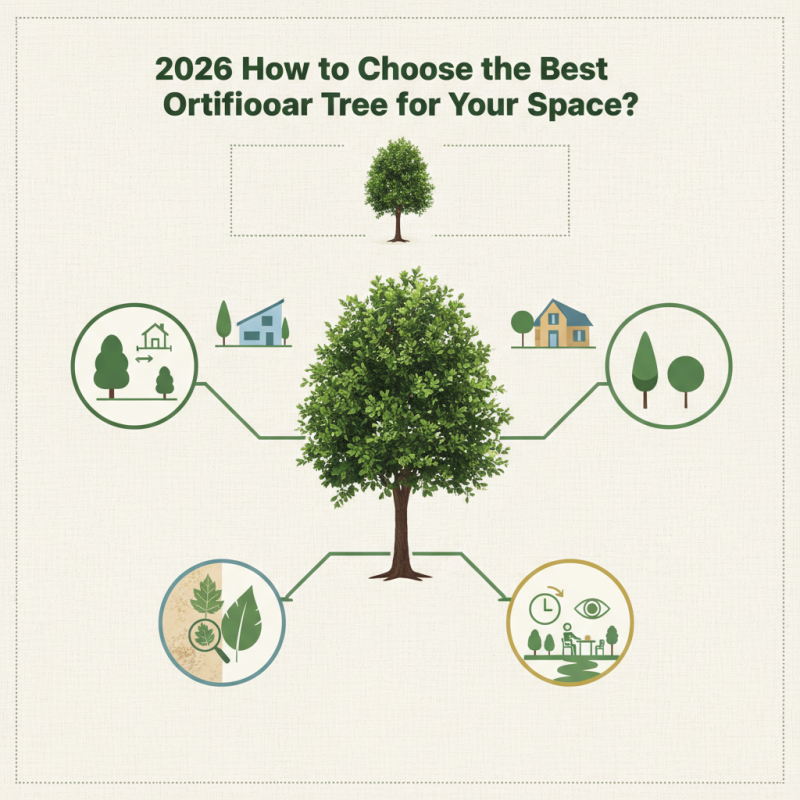
Consider the size of your space. A towering tree might overwhelm a small patio. Conversely, a tiny tree could be lost in a spacious yard. Think about the style of your home. A sleek, modern design may clash with a traditional tree. You want harmony.
Keep in mind the material. Some Artificial Outdoor Trees look realistic, while others appear synthetic. Touch and look can guide your choice. To fit your aesthetic perfectly, don’t rush. Allow time to explore various options. This decision impacts your outdoor enjoyment for years. Embrace the process, even when it seems daunting.
Understanding the Benefits of Artificial Outdoor Trees for Landscaping
Artificial outdoor trees can transform your landscaping. They provide beauty without the upkeep of natural trees. These trees don’t shed leaves or attract pests. This means less cleaning for you.
**Tips:** When choosing, think about your space. Consider the size and style that fits. A tall tree might overwhelm a small garden. A cluster of smaller trees could look charming.
Additionally, artificial trees are weather-resistant. They won’t fade in the sun or get damaged by rain. This durability makes them a smart choice for many outdoor environments. However, not all artificial trees look realistic. Some may need a closer look to see their true quality.
**Tips:** Always read reviews before buying. Also, compare different textures and colors. Take note of how they look from a distance. You want your outdoor area to feel inviting and lively.
2026 Trends in Artificial Outdoor Trees for Landscaping
Key Factors to Consider When Choosing Artificial Outdoor Trees
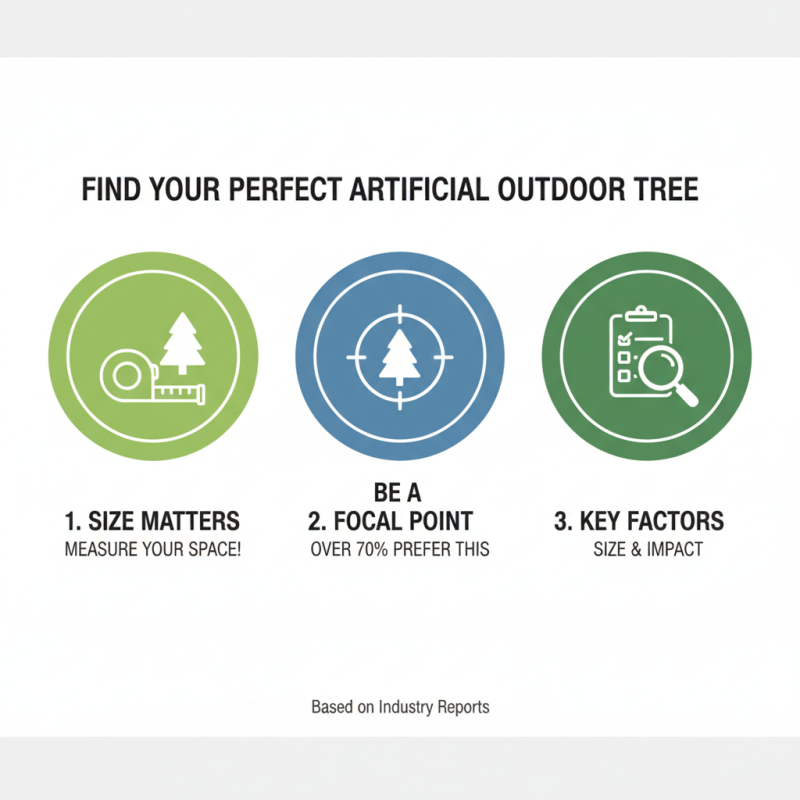
When selecting the best artificial outdoor tree for your space, there are several key factors to consider. Size is crucial. A tree that is too large may overwhelm your area, while a small one might lack impact. Industry reports indicate that over 70% of consumers prefer trees that create a focal point. Measure your space carefully before making a decision.
Material quality significantly affects the longevity of your artificial tree. High-quality materials resist fading and wear. It's interesting to note that studies show trees made from UV-resistant polyethylene last longer than those made from cheaper materials. Choose a tree that can withstand various outdoor conditions, including heat and moisture.
Color and realism are also important. The best trees mimic the natural variations found in real foliage. Look for trees that offer a blend of shades and textures. However, not all offerings live up to expectations. Some may appear too uniform or artificial. It’s vital to check reviews and consider what others have experienced. Often, it’s the small details that enhance realism, making your choice more effective.
Material and Design: Selecting the Right Type of Artificial Tree
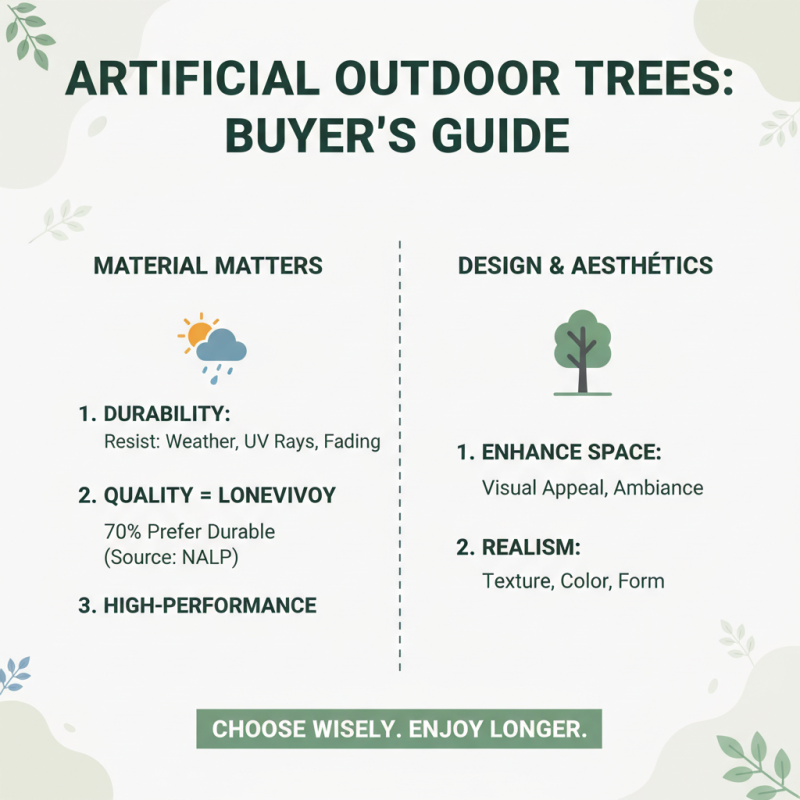
When choosing an artificial outdoor tree, material and design are crucial factors. The right tree can enhance your outdoor space significantly. Many shoppers overlook the importance of material. High-quality materials can resist weather changes, UV rays, and fading. A report from the National Association of Landscape Professionals found that 70% of consumers prefer durable materials.
Common materials for artificial trees include polyethylene and PVC. Polyethylene trees often look more realistic. They have softer textures and better color depth. However, PVC trees are generally more affordable. They tend to be more rigid but can still serve well in landscapes. Choosing the right material impacts both aesthetics and longevity.
Design also plays a vital role. Consider the tree's size and shape concerning your space. A tree that's too large may overwhelm a small garden. Conversely, a tiny tree may get lost in expansive areas. A survey by the American Society of Landscape Architects suggests that trees should complement surrounding elements. Many designs come with irregular branches, which can create a natural feel. Imperfections can add character, making your choice unique.
Sizing Your Artificial Outdoor Tree: Proportions and Placement Tips
Choosing the right size for your artificial outdoor tree is crucial. You want it to fit well in your space without overwhelming it. Measure the height and width of the area where you plan to place the tree. A small garden may look crowded with a tall tree. Conversely, a large tree can dominate a wide open space, making it feel smaller.
Consider the proportions. If your patio has high ceilings, a tall tree can enhance the space. For lower ceilings, a shorter, bushier design may work better. Furthermore, think about the distance from other objects. A tree too close to furniture may obstruct views or pathways.
Placement matters too. An artificial tree can be a focal point or a subtle addition. Try positioning it near a seating area to create a more inviting atmosphere. Alternatively, placing it away from other elements can draw the eye. Reflect on what vibe you want to achieve with your design. This trial and error process can lead to surprising results and a unique space.
Maintenance and Longevity: Ensuring Your Tree Stays Vibrant for Years
When selecting an artificial outdoor tree, maintenance and longevity are crucial. A well-cared-for tree can enhance your space for years. To start, choose a high-quality material. UV-resistant fabrics withstand sunlight, reducing fading. Regularly clean the leaves with a gentle cloth. Dust and debris can accumulate, dulling its appearance over time.
Proper placement matters too. Position your tree where it won't face harsh weather. Strong winds, heavy rain, or snow can cause wear and tear, even on artificial plants. Periodically check for any signs of damage. Sometimes, you may find that an old tree can look fresh with a little attention.
Remember, vibrant colors can fade. To maintain that lively look, store your tree indoors during extreme weather. If it does get discolored, consider using fabric-safe sprays. This can rejuvenate its appearance nicely. Reflect on your choices and adjust as necessary. Sometimes, it takes a few tries to find the perfect fit for your space.
2026 How to Choose the Best Artificial Outdoor Tree for Your Space? - Maintenance and Longevity: Ensuring Your Tree Stays Vibrant for Years
| Tree Type |
Height |
Maintenance Level |
Longevity (Years) |
Weather Resistance |
| Faux Palm Tree |
6 ft |
Low |
10+ Years |
UV Resistant |
| Artificial Maple Tree |
5 ft |
Medium |
8 Years |
Fade Resistant |
| Pine Tree Replica |
7 ft |
Low |
12 Years |
Water Resistant |
| Bamboo Tree |
4 ft |
Medium |
10 Years |
UV & Water Resistant |
| Cherry Blossom Tree |
5.5 ft |
High |
15 Years |
Fade Resistant |